








📖 Desperate Woman & Loan Shark
Controlled Prompt
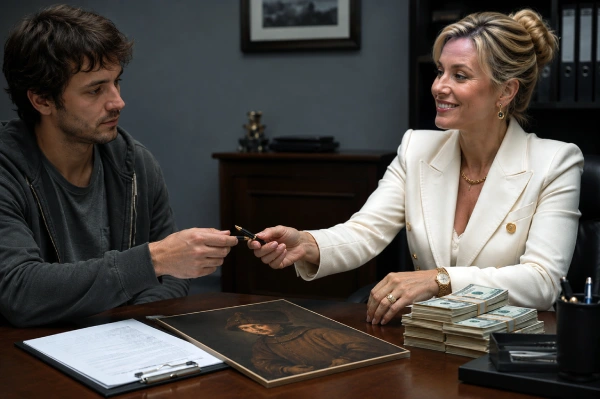
Photorealistic cinematic scene of a loan shark lending money to a desperate woman in a small office. Sitting side by side at a wooden table. The woman is slender, modestly dressed, with a worried, tense, and exhausted expression on her face, clearly enduring a difficult life situation. The loan shark is a heavier, well-dressed man in an expensive suit with a subtly greedy and calculating look. Papers and a loan agreement rest on the table while the man holds a stack of cash. Cinematic lighting, realistic skin texture, natural facial expressions, subtle storytelling through body language and character contrast, top-tier photorealism, dramatic composition, shallow depth of field, 16:9 aspect ratio.